Fashion is a visual, fast-moving, and intensely competitive business, and in Morocco it spans a remarkable range: ready-to-wear boutiques in Casablanca and Rabat, independent designers building a name, modest wear and caftan houses that sell to the Gulf and the diaspora, leather and accessory makers carrying generations of craft, and pure-play online stores shipping across the country and beyond. What unites them is a simple problem: people are searching for what they sell, every single day, and most of that demand is being captured by whoever ranks first on Google. As a fashion SEO agency in Morocco, our job is to make sure that brand is yours, on the searches that turn browsers into buyers.
This page explains why fashion brands and boutiques in Morocco need search engine optimization, how shoppers actually find clothing and accessories online, what it takes to rank product and collection pages, how visual SEO and image search work in fashion, and how we approach seasonal collections, brand authority, and international demand. It is written for founders and marketers who already know their product is good and now want the right people to find it.
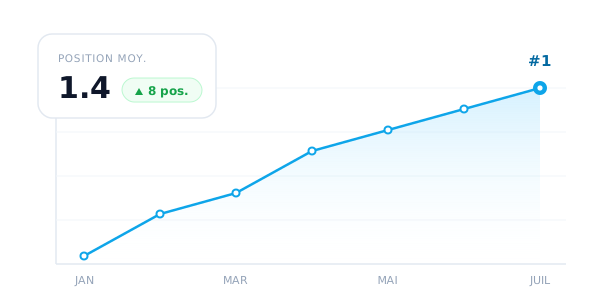
Before going further, one note on proof: every claim we make about method is backed by websites we operate ourselves, with numbers you can check on our results page and in our Morocco SEO Study 2026, built on 794,000 real Google impressions. Page 1 captures 96% of clicks in Morocco; everything below is about getting fashion brands onto it.
Why fashion brands and boutiques in Morocco need SEO
Answer first: fashion shoppers research and compare on Google before they buy, and the brands that rank for those searches win the sale without paying for every click. SEO is how a Moroccan fashion brand turns constant, free-flowing search demand into a durable stream of qualified traffic.
Consider how differently fashion is bought today. A bride in Casablanca looking for a caftan compares dozens of designs across search and image results before contacting anyone. A shopper in Marrakech wants a leather bag and types the style and color they have in mind. A buyer in Paris or Dubai searches for a hand-embroidered abaya or a Moroccan kaftan online, never having heard of your brand, and clicks whoever appears first. In every one of these moments, organic search is the front door, and an unoptimized store is invisible at exactly the moment of highest intent.
The brands that benefit most from fashion SEO in Morocco include :
- Online stores and pure-play e-commerce. Catalogs live and die by category and product rankings. Organic visibility on high-intent queries converts directly into orders with no per-click cost, which is why search is the cheapest scalable channel a store can build.
- Independent designers. A distinctive designer needs to be discoverable by name and by style. SEO builds the branded searches and the editorial visibility that turn a name into a recognized label.
- Modest wear and caftan brands. Demand for caftans, takchitas, abayas, and modest occasion wear is global and search-driven. Ranking for these terms reaches engaged buyers across the Gulf, Europe, and the diaspora.
- Leather goods and accessory makers. Bags, babouches, belts, and jewelry sell on craftsmanship and visuals, which makes image search and structured product data unusually powerful.
- Boutiques with a physical and online presence. Local search and a strong Google Business Profile bring nearby shoppers, while organic and image search bring the rest of the country and beyond.
For any of these, organic search is the channel that keeps working after the campaign budget is spent. You can see how this fits into our wider approach on the home page and the dedicated SEO service page.
How fashion shoppers search: brand vs non-brand demand
Answer first: fashion search splits into branded queries, where the shopper already knows your name, and non-brand queries, where they describe what they want. You need both, and most growth hides in the non-brand layer.
Branded search is people typing your brand name, or your brand plus a product, because a friend recommended you, they saw an Instagram post, or they bought before. This demand is yours to lose: if your own pages do not rank cleanly for your name, you are leaking warm buyers to marketplaces and resellers. Protecting branded search is the first, fastest job of fashion SEO.
Non-brand search is where the bulk of new customers live. These are shoppers who do not know you yet but know what they want: a fabric, a cut, a color, an occasion, a season. In fashion this non-brand layer is unusually deep, because clothing has so many attributes. We build a keyword map that runs from the top down :
- Category terms. Broad, high-volume queries such as women’s dresses, men’s jackets, or leather handbags. Competitive, but the foundation of category-page demand.
- Subcategory and attribute terms. More specific combinations of style, fabric, cut, and color, like linen summer dress or embroidered caftan. Lower volume, far higher intent, easier to win.
- Occasion and intent terms. Searches tied to a moment, such as wedding guest caftan, Eid abaya, or beach outfit. These convert strongly because the need is concrete.
- Long-tail and local terms. Very specific or geographic queries, like caftan shop Casablanca or buy Moroccan leather bag online. Low competition, high conversion, ideal early targets.
The art of fashion SEO is matching each layer to the right page type so the site answers the full range of how people search, from the broadest browse to the most specific buy.
Product and collection page SEO for apparel
Answer first: in fashion, collection pages do the ranking work for category and attribute searches, and product pages capture specific, high-intent demand. Both need unique, descriptive content, clean structure, and proper internal linking, not just a grid of images.
Collection pages are the workhorses of a fashion store. A page for caftans, summer dresses, or leather bags should rank for the category and its close variants, and that requires more than a product grid. We add genuinely useful introductory and supporting copy that describes the range, the fabrics, the fits, and the occasions, so the page has something for Google to read and rank. Faceted navigation, the filters for size, color, and price, must be handled so it creates useful indexable pages where demand exists without spawning thousands of thin, duplicate URLs that bloat the crawl.
Product pages capture the most specific demand. Each one should have a unique title and meta description, a descriptive heading, and original copy about the material, cut, sizing, care, and styling. The single most common and damaging mistake in fashion e-commerce is publishing manufacturer or generic descriptions across many products, which creates duplicate content that Google has no reason to rank. We write or rewrite descriptions so every product page earns its place, and we connect related products and collections through internal links so authority and relevance flow through the catalog.
Sound product and collection architecture is shared across all online retail, and the deeper mechanics, faceted navigation, canonical handling, and out-of-stock strategy, are covered on our e-commerce SEO page. Fashion simply pushes these to the limit because catalogs are large, seasonal, and visually driven.
Visual SEO: image optimization, alt text, and structured data
Answer first: fashion is bought with the eyes, and a large share of fashion discovery happens in Google Images, so image SEO is not a nice-to-have, it is a primary ranking channel. Getting it right means optimized files, descriptive alt text, and product structured data.
People shopping for clothing, caftans, bags, and shoes search visually. They open Google Images, scan, and click through to buy. A fashion store that neglects image SEO is invisible in one of its most important shop windows. The fundamentals we apply to every image :
- File names and formats. Descriptive, keyword-aware file names instead of IMG_2043, served in modern, compressed formats so pages stay fast on mobile without sacrificing visual quality.
- Alt text. Accurate, descriptive alternative text on every product image that describes the garment, its color, and its key features. Alt text helps Google understand the image, supports image-search ranking, and serves shoppers using assistive technology.
- Image sitemaps and indexability. Making sure product imagery is crawlable and, where relevant, included in image sitemaps so it can surface in Google Images.
- Speed. Large hero and lookbook images are the most common cause of slow fashion pages. We compress and size them correctly so Core Web Vitals stay healthy on the mid-range Android phones most Moroccan shoppers use.
On top of images, structured data is what makes fashion pages eligible for rich results. Product schema lets Google display price, availability, and review stars directly in the results, which lifts click-through dramatically on a visual, comparison-heavy purchase. We implement Product, Offer, and review structured data correctly so your listings stand out in a crowded results page.

Seasonal collections, trends, and content
Answer first: fashion demand is seasonal and trend-driven, so fashion SEO must be timed. Pages need to be live and ranking before a season or trend peaks, which means publishing ahead of demand, not chasing it.
A summer collection that goes live in June has already missed the searches that started in April. We build a content calendar around the fashion year, Eid, wedding season, Ramadan, summer, back-to-school, and end-of-year, so collection and editorial pages are indexed and gathering authority weeks before shoppers start searching. Evergreen collection pages get refreshed each cycle rather than rebuilt from scratch, so they keep the rankings and links they have earned while the new season’s pieces flow in.
Beyond product pages, editorial content earns rankings, links, and trust that pure catalog pages cannot. Effective fashion content includes :
- Styling and how-to guides. How to style a caftan, how to choose a modest occasion outfit, how to care for leather. These answer real questions and capture demand the catalog cannot.
- Trend and lookbook pages. Seasonal trend roundups that rank for trend searches and naturally attract links and mentions.
- Buying guides. Fabric guides, sizing guides, and occasion guides that build topical authority and feed AI search engines clean, citable answers.
This editorial layer does double duty: it ranks for informational searches and it builds the brand authority that lifts the entire store.
Building brand authority and reaching international buyers
Answer first: authority, earned through quality content, press coverage, and reputable backlinks, is what lets a Moroccan fashion brand outrank larger competitors and get discovered by international buyers. It is the slowest pillar to build and the hardest for rivals to copy.
Morocco’s fashion strengths, authentic caftans, hand embroidery, leather, and artisanal accessories, are exactly what international shoppers seek out. Buyers in France, the UK, the Gulf, and North America search Google and Google Images for Moroccan caftans, hand-embroidered abayas, and Moroccan leather goods. Ranking for those terms, in the language each market searches in, puts genuine craftsmanship in front of motivated buyers at a fraction of the cost of paid acquisition.
Authority is built through real signals: editorial and lookbook content worth linking to, coverage in fashion and lifestyle publications, collaborations and features, and consistent brand information across the web. We earn relevant, reputable backlinks through genuine outreach and content rather than buying spammy links that risk penalties. Over time this authority compounds, protecting your rankings and making every new collection page easier to rank than the last.
The Moroccan and export fashion context
Answer first: Moroccan fashion SEO must account for a multilingual, mobile-first, socially driven market at home and a multilingual export demand abroad. Getting language, mobile, and the social-to-search handoff right is what separates brands that grow from brands that stall.
A few features define this market :
- Language mix. Domestic fashion searches happen mostly in French, with a rising share in Moroccan Arabic. Export demand for caftans and modest wear is strong in French, English, and Arabic across the Gulf and the diaspora. Targeting only one language when buyers use several leaves traffic and revenue on the table.
- Mobile-first by default. Most Moroccan shoppers browse and buy on smartphones, often on mobile data. Heavy fashion imagery makes speed a constant battle, and Google indexes the mobile version first, so a slow mobile store quietly loses rankings and sales every day.
- Social commerce as the front of the funnel. Instagram and TikTok create desire and discovery, but they do not capture the searches that follow. Shoppers who see a piece on social then search for it by name or description: if your pages rank for that follow-up search, you capture the sale cheaply ; if they do not, a marketplace or competitor does.
- Export logistics and trust. International buyers need clear shipping, sizing, and returns information. Content that answers these questions builds the trust that converts a foreign visitor into a customer and signals quality to search engines.
SEO vs paid social for fashion brands
Answer first: paid social buys instant attention and is unmatched for launching a collection or creating desire, while SEO builds a durable, compounding asset that captures demand at the moment of intent. Fashion brands that win use both, with paid social up top and SEO catching the demand it creates.
| Factor | SEO (organic and image search) | Paid social (Instagram and TikTok ads) |
|---|---|---|
| Best at | Capturing existing demand at the moment of search | Creating new demand and desire |
| Time to results | Months to build, then compounds | Immediate, same day |
| Cost over time | High up front, low to maintain | Pay per result, ongoing forever |
| Durability | Lasting ; rankings and pages persist | None ; visibility stops when spend stops |
| Shopper intent | High ; the user is actively searching to buy | Low to medium ; the user is browsing a feed |
| Strength for fashion | Image search, product and collection ranking, brand discovery | Visual storytelling, launches, retargeting |
The honest takeaway: paid social and SEO are not rivals. Many fashion brands run paid social to launch collections and build awareness while SEO matures, then let organic and image search capture the resulting demand at a far lower cost per sale. You can talk through the right mix for your brand on our contact page.
Common fashion SEO mistakes to avoid
We see the same avoidable errors hold back otherwise strong fashion brands.
- Duplicate or generic product descriptions. Reusing manufacturer copy across products creates thin, duplicate pages that Google will not rank.
- No alt text and unoptimized images. Missing alt text and heavy image files cost both image-search visibility and page speed, two things fashion cannot afford to lose.
- Ignoring seasonality. Publishing collection pages once demand has already peaked, instead of weeks ahead, wastes the entire search window.
- Faceted navigation chaos. Letting every filter combination spawn an indexable URL bloats the crawl and buries the pages that matter.
- Relying on social alone. Building the whole funnel on rented social reach and never capturing the searches it generates.
- Targeting one language. Optimizing only in French or only in English when domestic and export buyers search in several.
- Neglecting structured data. Skipping product schema and losing the price, availability, and review stars that lift click-through in a crowded results page.
How we work
We run fashion SEO as a clear, repeatable process so you always know what is happening and why.
- Audit. A full technical and content audit of your store: crawlability, indexing, speed, mobile experience, image SEO, faceted navigation, existing rankings, and competitors.
- Keyword and intent map. We map the searches your audience performs, across categories, attributes, occasions, and languages, and match each to the right page type.
- On-page and product optimization. We optimize collection and product pages, titles, descriptions, headings, internal links, image SEO, and structured data so each page targets its keywords cleanly.
- Content and seasonal calendar. We produce styling guides, trend pages, and buying guides timed to the fashion year so pages rank before demand peaks.
- Authority building. We earn relevant, reputable backlinks and brand mentions through genuine outreach and content worth linking to.
- Reporting. We track rankings, organic and image-search traffic, and revenue, and report in plain language so you see the return, not just the activity.
Who it is for
Fashion SEO is for any brand in or selling from Morocco that wants qualified traffic it does not have to rent. It is for the online store tired of rising ad costs, the independent designer who wants to be discovered by name and by style, the caftan and modest wear house selling to the Gulf and the diaspora, the leather and accessory maker whose craft deserves international buyers, and the boutique that wants to own its city’s searches and its category’s image results. Brands at the start of their journey often pair this with the foundations on our SEO for startups page, while established stores focus on category, image, and export demand.
If your customers search Google, and for fashion they overwhelmingly do, then SEO is the channel that meets them at the moment of intent and keeps doing so long after the work is done. Review how we work on the home page, see what an engagement looks like on our pricing page, and tell us about your brand through the contact page. We will start with an audit, show you where the opportunities are, and build a plan that turns Moroccan and international fashion search into measurable growth.