Running a small business in Morocco means competing for attention every single day, and search is where many of your future customers are already looking. When someone in your city searches for what you sell, the businesses that show up first capture the call, the visit, and the sale. Everyone else is invisible. The encouraging truth is that you do not need a large marketing budget to win that visibility. You need the right priorities, a bit of patience, and consistent work in the places that matter most. This page explains exactly how small business SEO works in the Moroccan market, what to expect month by month, and where a limited budget produces the strongest return.
Why SEO is the most cost-effective channel for a small business
The short answer: SEO builds an asset that keeps working, while paid advertising rents attention that disappears the moment you stop paying.
When you run Google Ads or social media ads, you pay for every click or impression. The leads can arrive quickly, which is genuinely useful, but the economics are unforgiving for a small business. Pause the budget for a month and your traffic falls to zero. Raise your spend and competitors raise theirs, pushing costs up over time. You are renting a spot at the top, and the rent never stops.
SEO behaves differently. You invest in earning a ranking position, and once you hold it, that position keeps sending customers month after month at no extra cost per visit. The early months require effort and patience, but the cost per acquired customer drops steadily as the work compounds. For a small business watching every dirham, that compounding is the difference between marketing that drains the budget and marketing that builds something durable.
Here is the practical comparison most small business owners care about.
| Factor | SEO (organic search) | Paid ads (Google or social) |
|---|---|---|
| Cost per visit over time | Falls as rankings hold | Stays the same or rises |
| What happens when you stop paying | Traffic continues | Traffic stops immediately |
| Time to first results | Weeks to a few months | Almost immediate |
| Trust from customers | High, organic results feel earned | Lower, clearly marked as ads |
| Best fit for a small budget | Long-term foundation | Short-term bursts and testing |
| Long-term return | Compounds and grows | Flat, you pay to keep it |
The smartest small businesses do not treat this as a strict either-or choice. They often run a small paid budget for immediate leads while SEO matures in the background, then shift weight toward organic once rankings hold. But if you can only invest seriously in one channel, SEO is the one that builds equity rather than burning it.
Local SEO and your Google Business Profile
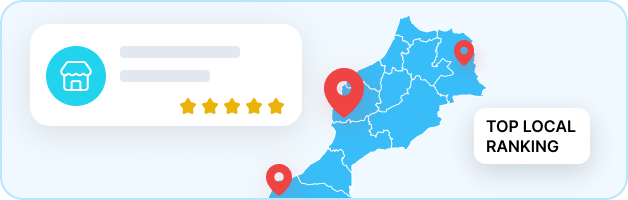
The single most important thing a local small business can do is claim, complete, and actively maintain its Google Business Profile. It is the number one local ranking factor and the first thing many customers see.
Your Google Business Profile is the listing that appears in Google Maps and in the local pack, the small block of three businesses with a map that shows up for local searches. For a restaurant, a clinic, a garage, a salon, or a shop, this listing often drives more calls and visits than the website itself. And unlike most SEO work, optimising it is free and largely within your control.
To make your profile work hard for you, focus on the fundamentals:
- Complete every field. Business name, exact category, address, phone number, opening hours, and service area. Gaps signal a neglected listing to both customers and Google.
- Keep your name, address, and phone identical everywhere. Consistency across your website, directories, and social pages tells Google your business is real and trustworthy.
- Collect genuine reviews and reply to them. Reviews are a major ranking and trust signal. Ask happy customers in person, and respond to every review, positive or negative, in a calm and professional tone.
- Add real photos regularly. Your storefront, your team, your products, your work. Fresh, authentic photos build confidence and signal an active business.
- Post updates and offers. Use the posts feature to share news, promotions, and events. It keeps the profile alive and gives Google fresh signals.
- Choose the most specific category. A precise primary category helps you appear for the searches that actually convert.
A complete, active profile with steady reviews routinely outranks a bigger competitor with a neglected listing. This is where a small business with a small budget can genuinely beat larger rivals.
Ranking in the local pack and Google Maps
The answer most owners want: you rank in the local pack by combining relevance, distance, and prominence, and you influence all three with consistent local SEO.
Google decides which businesses appear in the local pack using three broad factors. Relevance is how well your profile and website match the search. Distance is how close you are to the searcher, which you cannot change but can work with by being clear about your service area. Prominence is how well-known and well-regarded your business is, shaped by reviews, mentions, links, and overall activity.
For a small business, the levers that move the needle most are:
- A fully optimised Google Business Profile, as described above. This is the foundation.
- A steady flow of authentic reviews. Volume, recency, and quality all matter. A handful of fresh five-star reviews each month beats a frozen pile from two years ago.
- Consistent citations. Your business listed accurately on Moroccan directories and relevant platforms, always with the same name, address, and phone.
- Locally relevant website content. Pages that mention your city, your neighbourhood, and the specific services you offer, written for real customers rather than search engines.
- A mobile-friendly, fast website. Most local searches in Morocco happen on phones, and a slow or clumsy mobile site quietly loses customers.
The businesses that win the local pack are rarely the biggest. They are the ones that treat their profile and reviews as an ongoing habit rather than a one-time setup.
Affordable SEO on a limited budget
The honest answer: you cannot do everything at once on a small budget, so you sequence the work and start with what produces results fastest and cheapest.
A limited budget is not a barrier to SEO. It simply demands discipline about priorities. The mistake small businesses make is trying to compete on every keyword everywhere. The winning move is to concentrate your effort on a tight, high-intent local footprint and expand only once that foundation pays off.
On a small budget, this is the order that usually delivers the best return:
- Google Business Profile first. It is free, fast, and the highest-leverage work you can do.
- Fix the website basics. Make sure it loads fast, works on mobile, has clear contact information, and tells Google what you do and where.
- Target a short list of local keywords. Pick a handful of searches your ideal customers actually use, with clear buying intent, and build simple pages around them.
- Build reviews and citations steadily. Low cost, high impact, and entirely sustainable over time.
- Add content gradually. One useful page or article at a time, answering the real questions your customers ask.
This sequence means even a modest monthly investment moves you forward every single month. You are not paying for a heavy campaign. You are paying for consistent, prioritised work that compounds.
Prioritising quick wins
Quick wins exist in small business SEO, and they matter because early momentum builds the confidence and the budget to keep going.
While SEO is a long game overall, several actions can produce visible movement within weeks:
- Claiming and completing a previously unclaimed or thin Google Business Profile. This alone can lift you into Maps results quickly.
- Fixing inconsistent contact information across the web so Google stops doubting which details are correct.
- Gathering a first wave of fresh reviews from recent happy customers.
- Adding clear, specific service and location pages where your site previously had none.
- Improving page speed and mobile usability on a slow site, which can lift both rankings and conversions.
These wins do not replace the patient work of building authority, but they create early proof that the strategy is working. For a small business, that early proof is what justifies staying the course.
The ROI of an acquired position over time
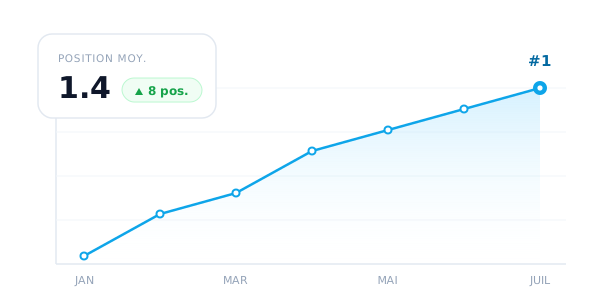
The key insight: a ranking position is an asset that pays dividends long after the work that earned it.
Think of a top organic ranking the way you would think of owning rather than renting. The first months are an investment. But once you hold a strong position for a valuable local search, every customer it brings arrives without an additional click charge. Over a year, the cost per customer from that position keeps dropping while the customers keep coming.
This is why SEO so often outperforms paid advertising on long-term return for small businesses. With ads, your cost per customer is roughly fixed and can rise as competition grows. With SEO, the same investment is spread across an ever-growing number of visits as your rankings mature and hold. A position earned in your first year can still be sending customers years later, which is a return profile no advertising budget can match. Our broader approach to this is covered on our SEO services page.
What a small business should expect month by month
The honest timeline: gradual at first, compounding later, with local wins arriving sooner than website rankings.
Every market is different, but a realistic pattern for a small business looks roughly like this.
- Month 1. Foundation work. Claiming and optimising the Google Business Profile, auditing and fixing website basics, choosing target keywords, and fixing inconsistent business information. Early local visibility may begin to appear.
- Months 2 and 3. Building momentum. Steady review collection, citation building, and the first locally optimised pages. Local pack and Maps visibility usually strengthen here, and the first website rankings for easier terms start to surface.
- Months 4 to 6. Traction. Rankings climb for your target local keywords, organic traffic grows, and calls and visits attributable to search become noticeable. This is where the compounding starts to feel real.
- Month 6 onward. Acceleration. With a trusted profile and a maturing site, gains tend to steepen. New content ranks faster, and your position becomes harder for competitors to dislodge.
The most important habit across all of these months is consistency. SEO rewards businesses that keep showing up.
DIY versus hiring help
The practical answer: do the foundation yourself, and bring in help when you hit a ceiling or run out of time.
There is no shame in doing small business SEO yourself, and plenty of owners get real results from the basics. Claiming your profile, completing it well, gathering reviews, keeping your information consistent, and writing clear pages are all within reach of a motivated owner.
You typically benefit from outside help in three situations. First, when competitors consistently outrank you despite your best efforts and you cannot see why. Second, when time is the bottleneck and the work keeps slipping because you are busy running the business. Third, when you want to move faster and avoid expensive mistakes, since experienced help compresses months of trial and error.
A practical way to weigh the three common options:
- DIY, where the owner does the work. Lowest cost since you spend time rather than money, and progress is slow but steady. Best for foundation work and very tight budgets.
- A freelancer. Moderate cost, with speed that varies a lot from person to person. Best for specific tasks and flexible, scoped-down work.
- An agency. Higher but more predictable cost, with faster and more consistent output. Best for sustained growth and owners who want to stay hands-off.
Many small businesses blend these. They handle reviews and day-to-day profile activity in-house while bringing in help for strategy, technical fixes, and content. If you want to talk through which mix fits your situation, you can reach out to us.
The Moroccan small business context
Local context matters: Moroccan customers are mobile-first, multilingual, and influenced by both word of mouth and search, so your SEO must reflect all three.
Small business SEO in Morocco has a few distinctive traits that shape strategy.
- Mobile-first by default. The overwhelming majority of local searches happen on smartphones. A fast, clean mobile experience is not optional. A site that frustrates phone users loses customers before they ever call.
- A multilingual search landscape. Customers search in French, in Arabic, and in Darija written with Latin letters, often mixing them. French dominates most commercial searches, but ignoring Arabic terms entirely leaves visibility on the table. The goal is to match how your customers actually type, not to enforce a single language.
- Word of mouth and search reinforce each other. Reputation travels fast locally, and customers who hear about you then search to confirm. Strong reviews and a polished profile turn that word-of-mouth curiosity into a booked appointment or a visit.
- Trust is decisive. Real photos, genuine reviews, clear contact details, and a professional presence matter more here than flashy marketing. Customers want to feel the business is real, reachable, and reputable before they commit.
A small business that respects these realities, by being fast on mobile, present in the right languages, and visibly trustworthy, has a genuine advantage over competitors who treat search as an afterthought.
Common mistakes small businesses make
Avoid these and you are already ahead of most local competitors.
- Never claiming the Google Business Profile. The single most common and most costly oversight. An unclaimed or half-finished profile leaves easy visibility on the table.
- Inconsistent business information. Different addresses or phone numbers scattered across the web confuse Google and erode trust.
- Ignoring reviews. Not asking for them, or never responding, signals a passive business and forfeits a powerful ranking signal.
- A slow or non-mobile-friendly website. In a mobile-first market, this quietly loses customers every day.
- Targeting keywords that are too broad or too competitive. Chasing national terms instead of winnable local searches wastes a small budget.
- Expecting instant results and quitting too early. SEO compounds. Most businesses that fail at it simply stopped right before the gains arrived.
- Treating SEO as a one-time project. It is an ongoing habit. The businesses that win are the ones that keep showing up month after month.
Most of these mistakes are easy to fix, and fixing them is often where the fastest improvement comes from.
How we work with small budgets
Our approach: start small, prioritise ruthlessly, and prove value before expanding.
We know small businesses cannot afford bloated campaigns or vague promises. So we start where the return is highest and the cost is lowest. That usually means getting your Google Business Profile into top shape, fixing the website fundamentals, and targeting a focused list of local keywords that real customers use. We build momentum with reviews and citations, then add content gradually as the foundation pays off.
We keep the work transparent and the scope matched to your budget, so every month moves you forward without overextending. As rankings hold and customers arrive, we expand the strategy in step with the results, never ahead of them. The aim is steady, compounding progress you can actually feel in calls, visits, and sales. You can see how this fits into our wider work on the main SEO page.
Who this is for
Small business SEO in Morocco is the right fit for owners who want sustainable growth rather than a quick, expensive spike. It suits the local restaurant that wants more covers, the clinic that wants more appointments, the garage, the salon, the boutique, and the service provider who relies on local customers and word of mouth.
If you serve a specific area, depend on being found when nearby customers search, and want marketing that builds equity instead of draining the budget, this is for you. It is especially powerful for businesses willing to be patient and consistent, because that is exactly what SEO rewards.
If your business has a more specialised model, we also cover focused approaches for restaurants, online stores, and travel and tourism. And when you are ready to plan an approach that fits your budget and your market, the next step is simply to start the conversation.